



You can be accurately diagnosed by a thorough examination using advanced equipment and consultation by experienced doctors of Wooridul Spine Hospital.

Neurosurgically your Back Pain
is caused by various diseases such as Sprain, Disc Bulging/Herniation, Foraminal Disc Herniation, Degenerative Disc Disease, Spinal Stenosis, Spondylolisthesis, Spondylolysis, Fracture, Facet Cyst, Tumor, Scoliosis, etc.


This surgery is to prevent further curvature of the spine and create a balanced spine when the curve is more than 40°, when daily life is difficult due to severe deformation, or when the appearance is unsightly.


It is a high-level surgical method that can straighten a severely curved spine, and it can be operated safely with little bleeding and step-by-step surgery through collaboration with a spine specialist, general surgeon and thoracic surgeon.
What is scoliosis?
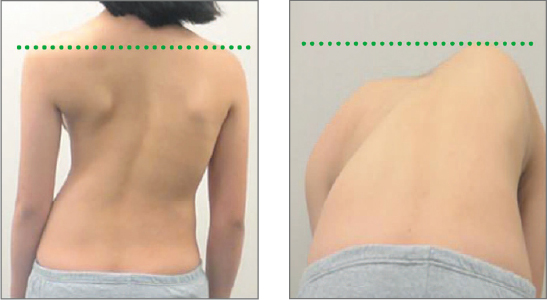
It is a condition characterized by an S- or C-shaped curvature of the spine when viewed from behind.
How common is it?
It is observed in approximately 2–3% of the population.
Self-Check for Scoliosis
Diagnostic Criteria
Scoliosis is diagnosed when the Cobb angle is 10° or greater.



Advantages of Deformity Correction


Corrected the curved spine from 125° to 70° after deformity correction 16-year-old female patient who developed severe scoliosis after treatment with alternative therapies
A No. Heavy bags or poor posture have not been confirmed as causes of scoliosis. However, maintaining good posture is beneficial for overall spinal health.
A In most cases, the exact cause is difficult to identify, so there is no definitive prevention method. Therefore, regular monitoring for early detection is very important.
A It is difficult to correct the curve or stop its progression with exercise alone. However, maintaining muscle strength and flexibility can be helpful, so it is often done alongside treatment.
A A difference in shoulder height alone does not confirm scoliosis. Scoliosis is diagnosed when the Cobb angle measures 10° or more on a full-spine X-ray.
A Bracing is generally recommended for curves between 25° and 40° during growth periods. For effectiveness, wearing the brace for at least 20 hours per day is usually recommended.
A The goal is not to “straighten the spine while wearing the brace,” but to maintain the curve angle (prevent progression) even after the brace is removed.
 Accreditation of Spine Specialty Hospital by the Korean Ministry of Health and Welfare
 Healthcare Accreditation by the Korean Ministry of Health and Welfare
 Healthcare Provider Certification for International Patients by the Korean Ministry of Health and Welfare
 Top 10 World’s Best Hospitals for Medical Tourists
 30 Most Technologically Advanced Hospitals in the World
 ‘World's Best Smart Hospital'
Copyright © 2026 Wooridul Spine Hospital
All Rights Reserved.


 Calling
 Appointment
 Our Doctors
